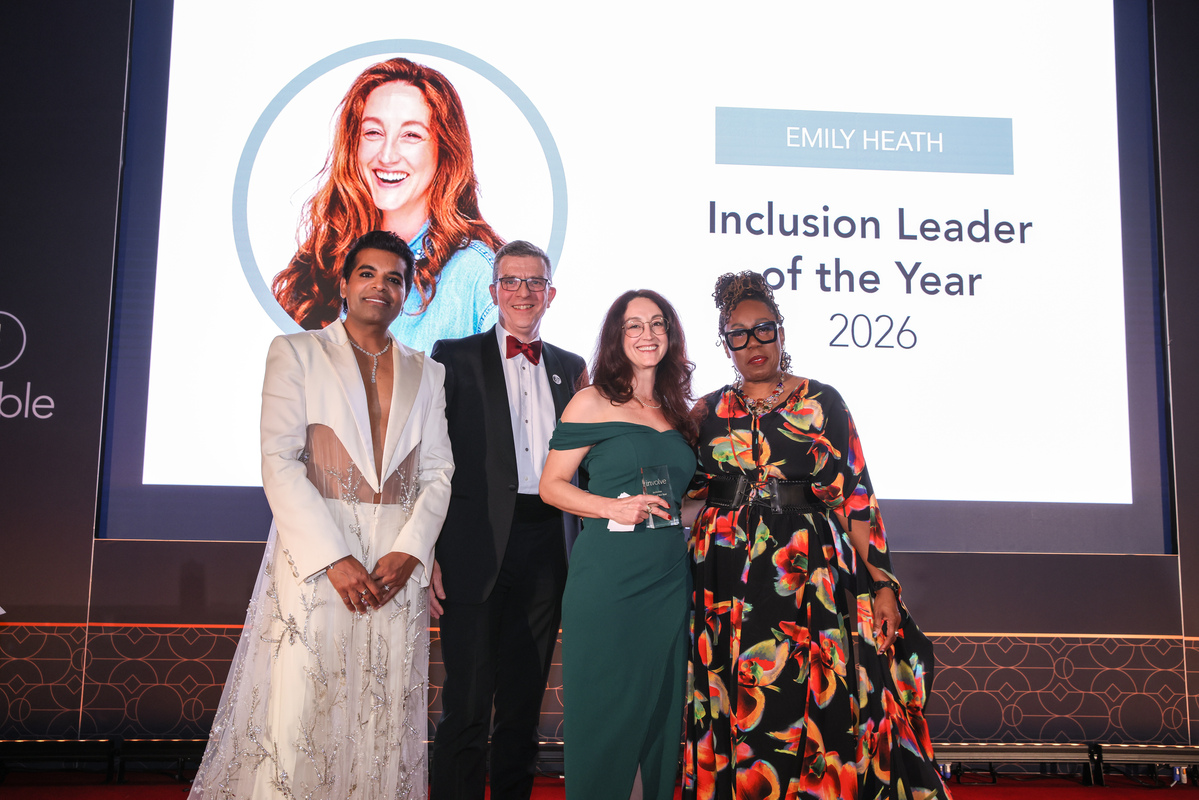
We were delighted to interview Emily Heath, Group Inclusion Lead, BAT and INvolve’s first-ever Inclusion Leader of the Year for the UK, about her personal journey, her approach to inclusive leadership, and the work she has helped drive at BAT.
Congratulations on being named the 2026 London Inclusion Leader of the Year. What does this recognition mean to you personally, and what does it represent about the inclusion work being driven at BAT?
Being named the 2026 London Inclusion Leader of the Year is incredibly meaningful, but I see it as recognition of a collective effort rather than an individual achievement. Inclusion is never created by one person. It comes from colleagues who share their experiences, community leaders who give their time and energy, and leaders who are prepared to listen, learn and act.
For me, this award reflects the progress we are making at BAT to move inclusion beyond aspiration and embed it into our culture, leadership and everyday decisions. I’m proud to play a part in that journey and grateful to everyone who has trusted me with their perspectives and partnered with me to turn them into meaningful action.
Why is inclusion personally important to you, and how does that purpose influence the way you approach your role?
Inclusion matters to me because I know what it feels like to enter an unfamiliar environment and have to find your place. I grew up in a small town in Indiana before moving to Chicago, London and later Paris. Each experience introduced me to different people, cultures and ways of seeing the world.
Moving to Paris at 18, speaking very little French, was especially formative. It taught me to listen more than I spoke, to lead with curiosity and never underestimate how much courage it can take to feel that you belong.
Those experiences still shape how I work today. I try to listen without assuming I already understand, to approach people with empathy and to stay open to having my own perspective challenged. To me, empathy is not a soft skill. It helps us build trust, make better decisions and create the conditions for people to contribute at their best.
Looking back at the work that led to this recognition, what is the initiative, moment or outcome you are most proud of, and why?
I’m most proud of the development of BAT’s five-year Inclusive Culture Strategy. It gave us the opportunity to bring different areas of our work together and set a clear direction for the culture we want to build.
What made it particularly meaningful was how we developed it. We did not want to create a strategy behind closed doors and then ask colleagues to connect with it. We drew on virtual focus groups involving more than 1,500 participants and held six global validation workshops. Colleagues from different regions, functions, leadership teams and Employee Resource Groups helped us understand where experiences differed and what meaningful progress needed to look like across a global organisation.
Receiving endorsement from senior leadership and the Board was an important milestone, but what stayed with me was seeing colleagues recognise their own experiences and ideas within the final strategy.
It reinforced something I have always believed: people are more likely to support and sustain change when they have had a genuine role in shaping it. Co-creation can take longer, but it leads to better thinking, greater trust and a stronger sense of shared ownership.
Inclusion can sometimes feel broad or difficult to measure. How have you turned inclusion into tangible action at BAT, and what impact have you seen as a result?
My focus has been on making inclusion practical. That means translating our ambition into clearer behaviours, expectations and opportunities for people to take part.
We have embedded The Truly inclusive value performance objectives, developed leaders through our Truly Inclusive Leaders programme and strengthened our Employee Resource Groups through more consistent frameworks. More than 5,700 colleagues have completed Truly Inclusive Leaders workshops and e-learnings, helping them build skills they can apply within their teams.
We have also created moments that bring colleagues together. Our Cultural Diversity Day activation became the largest intranet campaign in BAT’s history, with over 70 internal posts generating approximately 185,000 views.
However, I never look at one figure in isolation. Participation tells us about reach, but we also need employee listening, inclusion sentiment and leadership accountability to understand whether people’s everyday experiences are genuinely changing.
What practical tools, frameworks or habits have been most effective in helping you embed inclusion into everyday decision-making?
The most effective tools combine structure with space for human judgement. Our 3Cs framework, Career, Culture and Community, gives Employee Resource Groups a practical way to plan activity and connect community-led work with development, cultural change and business priorities.
Inclusive performance objectives make inclusion part of how success is defined and reviewed, rather than something people address only when time allows. Our Truly Inclusive Leaders programme complements this by building practical capability in psychological safety, cultural intelligence, bias mitigation and courageous conversations.
Alongside these frameworks, I rely on three habits: asking who has not yet been heard, testing assumptions before decisions are finalised and creating space for constructive challenge. Employee listening is also an ongoing discipline, not a one-off survey exercise.
When we expanded how we collect demographic data it enabled us to identify patterns, while conversations help us understand the experiences behind them. Bringing those sources together allows us to make choices that are evidence-led, locally relevant and grounded in the realities of people’s working lives.
How do you bring senior leaders, managers and allies into the work of inclusion in a way that feels shared, accountable and sustainable?
I begin by helping people see their role in inclusion, rather than presenting it as work owned by a specialist team. For senior leaders, that means connecting inclusion to culture, talent, performance and the decisions they influence. For managers, it means providing practical guidance they can apply with their teams. For allies, it means creating meaningful ways to listen, learn, speak up and use their influence.
Shared ownership also needs visible accountability, so we reinforce expectations through performance objectives, leadership development, governance rhythms and measures of progress. At the same time, people need space to ask honest questions and acknowledge what they do not know.
Sustainable progress comes from combining clarity and accountability with empathy and support. The goal is not perfection; it is consistent action, openness to challenge and a willingness to keep learning.
What has been one of the biggest lessons you have learned through your inclusion work, and how has it shaped the way you lead?
One of my biggest lessons is that listening only builds trust when people can see what happens next. Inviting colleagues to share their experiences creates a responsibility to respond, even when the answer is not immediate.
This has made me more deliberate about closing the loop: explaining what we heard, what we can act on, where constraints exist and when people can expect an update. I have also learned not to arrive with every answer already formed. The people closest to an experience often understand both the challenge and potential solution most clearly. My role is to help their perspectives shape better decisions.
For HR and DEI leaders who are trying to maintain momentum in a challenging environment, what advice would you give them on securing buy-in and creating lasting change?
Start with the organisation’s reality, not with a generic inclusion blueprint. Understand the culture, business priorities, employee experience and level of readiness, then identify where inclusion can strengthen outcomes that already matter to the organisation.
Use data to build the case, but do not rely on numbers alone. Combine workforce and listening data with real experiences that help leaders understand what the data means for people. In my experience, buy-in grows when leaders can see both the human importance and the organisational relevance of the work.
Be clear about the change you are asking people to make. Broad commitments rarely shift behaviour, so translate ambition into specific expectations, practical tools, decision points and measures of progress. Build coalitions across functions, regions and employee communities rather than trying to carry the work alone.